
Magnet Algebra 7
The units we will cover this year include:
Unit 1 – Relationships Between Quantities and Reasoning with Equations
Topic 1 – Linear Equations in One Variable
Topic 2 – Linear Inequalities in One Variable
Topic 3 – Exponential Equations in One Variable
Unit 2 – Linear and Exponential Relationships
Topic 1 – Characteristics of Functions
Topic 2 – Constructing and Comparing Linear and Exponential Functions
Topic 3 – Systems of Equations and Inequalities in Two Variables
Unit 3 – Descriptive Statistics
Topic 1 – Analyzing Data Representation
Unit 4 – Quadratic Relationships
Topic 1 – Quadratic Equations
Topic 2 – Structure of Quadratic Expressions
Topic 3 – Solving Quadratic Equations
Unit 5 – Generating Function Properties
Topic 1 – Function Families
How is Magnet Algebra Different than other Algebra classes?
Students complete Algebra with these notable differences:
- regular interdisciplinary work with science and computer science
- rigorous pacing
- built in concept extensions
- real world applications and content-based projects
- stronger emphasis on statistics and data analysis skills used in science investigations
- time for exploration into student interest based concepts
Magnet Investigations in Science 7
| Unit | Title | Content Focus |
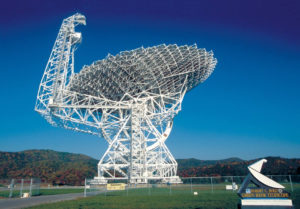
| 1 | Life and Astrobiology | Students will learn the characteristics of living things. Students will research how the history and evolution of the cell theory. Students learn the use of different bands of the electromagnetic spectrum for different telescopes as they learn to use a radio telescope and collect data on the Milky Way galaxy around them. Students will explore their surrounding solar system and justify the possibility of life outside of earth as they compare extremophiles to conditions on other planets. |
| 2 | Cellular Structure and Processes | Students will research a process for growing plants without the use of soil called hydroponics. Students will investigate a variety of different systems and growing mediums for raising plants and will analyze such variables as growth rate and food production. Students will learn that plants grown using this method take in oxygen and nutrients at a quicker pace and use less energy to absorb them. Plants will be used to introduce the structure and function of living organisms, parts of the cell, and cellular processes. Students will also learn what materials are required by living things, how the materials are delivered, and how these materials sustain life. |
| 3 | Matter and Energy Flow in Organism | Students will study the body systems of organisms and explore how the interactions of those systems affect overall functions. Students will learn about the levels of organization within an organism and the contribution cells provide a system as the basic building blocks of life. Students will explore how matter and energy are processed by organisms to build, maintain, and repair themselves. Students will relate structure and function of body systems to nutritional requirements and disease prevention. |
| 4 | Inheritance and Variation of Traits
|
Students will study the principles of heredity and genetics. They will learn how organisms reproduce and transfer their genetic information to their offspring. Students will study how characteristics get passed on from generation to generation and research several genetic disorders that affect human offspring. Students will use biotechnical processes to explore the genetic characteristics of organisms. Students will learn the ethics and possibilities of modern genetics. |
| 5 | Earth’s History and Evolution | Students will study Earth’s history, geological time, and explore how organisms have evolved. Students will examine the fossil record and construct explanations from mass extinctions. Students will explore the concepts of natural selection and adaption and will learn that traits of an organism can change as a result of environmental conditions or a need for survival. Student will explore the similarities between organisms and use biotechnical processes, such as DNA fingerprinting, as means of identification. |
Magnet Computer Science 7
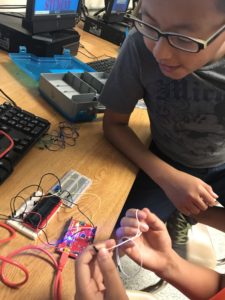
Discovery, inquiry, design, creativity, problem solving, and evaluation are key tenets of developing an understanding of how to program hardware to perform a function or task. In 7th grade, students will evolve from engineering and programming LEGO Mindstorms to making dynamic prototypes with Arduino circuit boards and programming them to complete a task.
 Units of Study:
-
-
- Computer Hardware: Arduino Circuitry
- Excel & Mobile Apps Programming
- Processing Programming and Using Coding in Visual Arts
- Web Design: CSS & Dynamic Websites
- Robotics: LEGO Mindstorm
-
Focus on Interdisciplinary Planning, Assessment, and Learning Opportunities
(Subject to change as necessary – Draft 9/24/19)
*** Although the plan below emphasizes the 6 major interdisciplinary projects that will go on this year, there are regular connections made with math, science, and comp sci topics of study.
Quarter 1
IDU – Telescope Observatory for Science, Math, and Comp Sci (Design)
-
- Using data from observatory to explain scientific phenomena
- Connecting automation to evolution of technology
IDU – Hydroponics for Comp Sci (Design) and Science
-
- Using Arduino circuits to automate different hydroponic systems designed and built by the students in science class.
Quarter 2
IDU – Body System App
-
- Students design and create a body systems app with 6 different screens. Each screen connects to 6 different human anatomy/nutrition topics: muscular system, muscle cells, organ sketch, nutrients in a cell screen, Food Location Regions with Google Map API, Database of food location, and Pound A Pathogen Game.
Quarter 3
IDU – Aesthetic Connections with Elements of design/art unit
-
- Study of traditional and digital art to show how to improve the aesthetics of final school projects.
IDU – Science fair
- Creation of self chosen experiment from science class and statistical analysis techniques from math class
Quarter 4
IDU – Smithsonian Natural History Project
-
- Students use information on extinction of species to create an interactive exhibit including all of the information regarding its extinction while making it user friendly and highly interesting with robotic and/or circuitry components of their choice.