7th Grade Magnet Computer Science
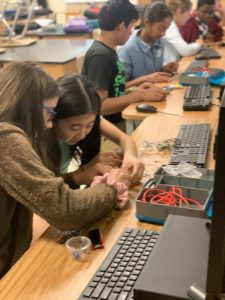 Welcome to Magnet Computer Science for grade 7. Discovery, inquiry, design, creativity, problem solving, and evaluation are key tenants of developing an understanding of how to program hardware to perform a function or task. In 7th grade, students will evolve from engineering and programming Arduino circuits to making robots complete dynamic moves as they navigate the surface of Mars. As we navigate the year, the students will learn Arduino circuits where they will use hardware, jumper wires, sensors, and breadboards to make their own circuits and program them to create their own hydroponics prototype. They will transition to designing and developing mobile apps for Android devices using object-oriented blockly programming through MIT App Inventor. Their programming knowledge will translate into the venue of designing, building and programming LEGO robots to perform a series of challenges and missions as if they were in Space or on Mars. The students in computer science will be assessed in two different IB MYP subjects: Design and Arts.
| MYP Design | MYP Arts |
|---|---|
|
|
2nd Quarter Reflections – Arduino Hydroponics System
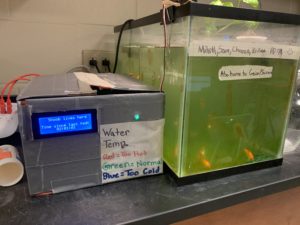
During second quarter, students took a deep dive into Arduino and building circuits. The students learned to manage multiple sensors and components to make dynamic 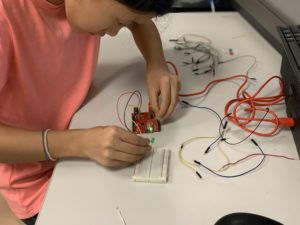 prototypes. They used this knowledge to make a 21st century hydroponic system that utilized Arduino’s to either automate their system or create warning mechanisms to ensure that their hydroponics system is working correctly.
Bella Vita Farms
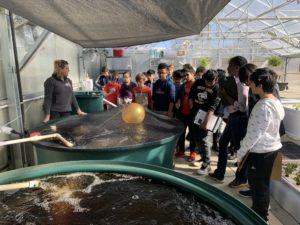
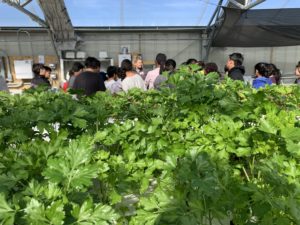
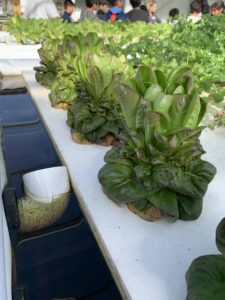
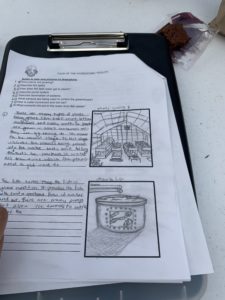
We kicked off the project with a visit to Bella Vita Farms to experience a working hydroponics / aquaponics farm. The students were able to see for themselves how aquaponics and hydroponics are grown using a variety of methods and practices where technology and classic hydroponic systems married into a great learning experience. The students reflected on the visit and analyzed the different aspects of the process through pictures and writing. This was the perfect preview to get their creative minds flowing as we were looking ahead to our interdisciplinary hydroponics project.
 |
 |
 |
 |
Arduino Hydroponics/Aquaponics Systems
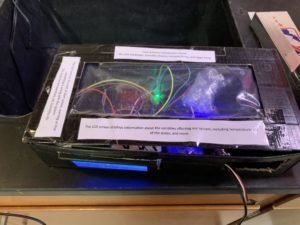
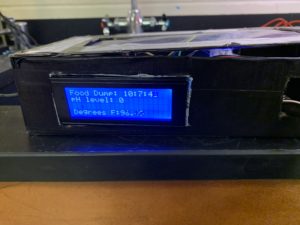
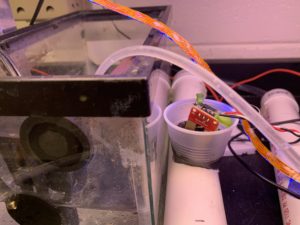
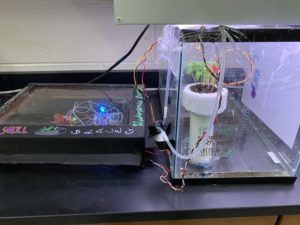
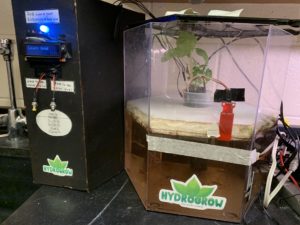
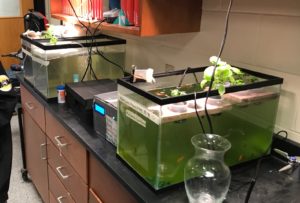
The students worked in teams to make their system by going through the MYP Design Cycle to make their hydroponics systems. The students began the project by researching and inquiring about different hydroponic systems. They then developed their own individual ideas and came together as a group for a final decision of their system. Building, redesigning, testing, prototyping, and reflecting enable groups to navigate the construction and programming of their system. The students then analyzed other student designed systems to reflect on the experience. Students were extremely proud and I was super happy s this was the first time we have done the project. I was blown away at the variety and what the students were able to do together. It is such a great interdisciplinary project for our course! View some pictures below to get an idea of the projects.
 |
 |
 |
 |
 |
 |
Unit 2 – MIT App Inventor
Students will be designing, creating, and programming Android mobile applications using MIT App Inventor. Students will employ programming concepts of condition statements and multimedia into their mobile applications to make them dynamic and responsive.
Our interdisciplinary project focus on the students designing and programming a Human Anatomy Food App. They will be creating a variety of screens covering the different topics that they have learned in their science unit and apply it to their mobile app.
For their summative project for the unit, students will be working in groups of 2 or 3 to design, develop, program, and produce a mobile application to improve the global community utilizing the UN Sustainable Development goals.
Unit 3 – LEGO Ev3 Robots
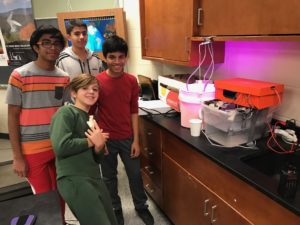
Students will build, program, and command a LEGO Mindstorm robot to complete the Space Challenge. This unit provides rich opportunities for students to explore and create solutions to current space-exploration topics. Students apply their knowledge of physical science and mathematics principles to investigate, observe, and calculate to solve specific tasks. During the unit, the students apply and creatively adapt programming and problem-solving skills to make robots solve Space Challenge Missions related to space exploration.
7th Grade Magnet Science
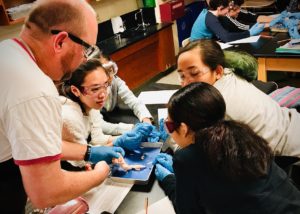
Welcome to Magnet Investigations in Science for grade 7. This curriculum is a unique problem/project based curriculum interwoven with skills learned in computer science and math class. The learning is student-centered with the teacher acting as a facilitator. Instruction is focused around one main problem within each unit of study, and students will be presented a request for proposals (RFP) at the start of each unit. Students engage in science, technology, engineering and mathematics (STEM) in order to propose solutions to identified problems. They will then use a design-folio throughout the unit to research, develop, design and evaluate their proposals. The following assessment criteria have been established by the IB for science in the MYP. The objectives of MYP science encompass the factual, conceptual, procedural and metacognitive dimensions of knowledge. Criterion A: Knowing and understanding, Criterion B: Inquiring and designing, Criterion C: Processing and evaluating, and Criterion D: Reflecting on the impacts of science.
 |
 |
Matter and Energy Flow in Organism
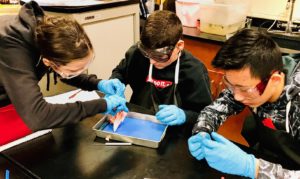
Inheritance and Variation of Traits
3rd Quarter Magnet Algebra – Statistics and Quadratic Equations
This curriculum is Algebra through the lens of science, engineering, and statistics. Students work in groups to problem solve and work together to learn the fundamentals of Algebra while working through real life connections as seen by a scientist. An emphasis is made on the use of statistics and data analysis as students work on independent projects of their choosing. The following assessment criteria have been established by the IB for math in the MYP. The objectives of MYP math encompass the factual, conceptual, procedural and metacognitive dimensions of knowledge. Criterion A: Knowing and understanding, Criterion B: Investigating patterns, Criterion C: Communicating, and Criterion D: Applying mathematics in real-life contexts.
